NewsNEWCENTER
Featured products
Contact Us
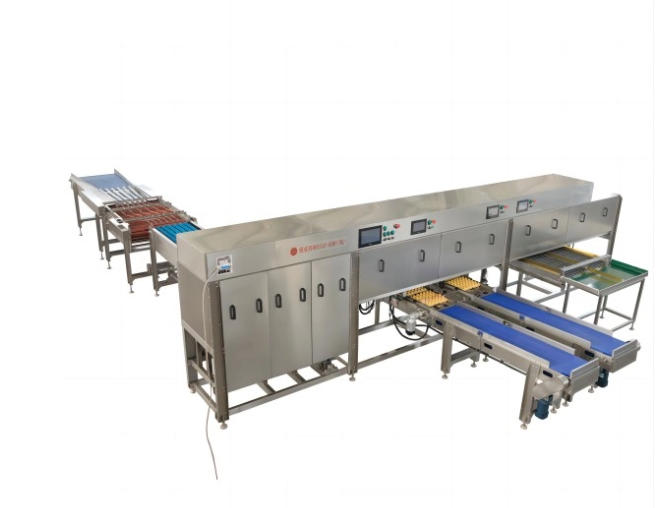
The Future Prospects of Egg Beaters
2026-07-30Prospects for the Development of Egg-Cracking Machines Since the launch of reform and opening-up, China’s total egg production has continued to rise. The industrial structure of the egg-cracking machine sector has been adjusted and optimised, a strategic industrial layout has gradually taken shape, and the sector’s competitiveness has been significantly enhanced. However, the development of China’s egg-cracking machine industry for laying hens still faces a number of prominent issues. Building on a summary of the current status and achievements of China’s egg-cracking machine industry, this article focuses on the problems encountered in egg-cracking machine production and the development of related industries, and puts forward policy recommendations to promote the sustainable development of China’s egg-cracking machine industry. Stable Development of the Egg-Cracking Machine Industry (I) Since the founding of the People’s Republic of China, the country’s egg production has shown an upward trend, and China has become the world’s largest egg producer. In 2008, total egg production reached 229,687 metric tonnes (accounting for approximately 40 per cent of global production), representing 84.65 times and 8.70 times the total egg production in 1949 and 1978, respectively. In tandem with the increase in egg production, the output value of the egg-breaking machine industry has also risen. Following the突破 of the 100 billion yuan mark in 2003, a vast industrial chain—encompassing poultry farming, egg breaking, egg retail, feed, veterinary medicines and vaccines—has emerged, with an annual output value exceeding 350 billion yuan. (2) With the rapid development of the livestock sector, the structure of China’s egg-breaking machine industry has been adjusted and optimised, leading to improvements in both efficiency and standards. ① The structure of the egg industry has been continuously optimised. In recent years, the proportion of chicken eggs in China’s total egg production has stabilised at around 85 per cent, whilst other types of eggs account for approximately 15 per cent (of which duck eggs make up 12 per cent, and goose and quail eggs 3 per cent). The development and introduction of new breeds have promoted further optimisation of the egg structure and accelerated the shift in egg production from a traditional quantity-driven model to a profit-driven one. Product structure is becoming increasingly diversified. Overall, the structure of egg consumption among Chinese residents remains relatively simple, with fresh eggs predominating. Consumption of fresh eggs accounts for 90 per cent of China’s total egg production, whilst the processing conversion rate stands at merely 0.26 per cent; the remaining 9.74 per cent is either exported as fresh eggs or lost. However, with advances in science and technology and shifts in consumer preferences, China’s egg-processing industry is steadily moving towards marketisation, and the structure of egg products is continuously being optimised and diversified. Firstly, the functional diversity of fresh egg products is increasing. In addition to basic nutritional value, consumers are increasingly seeking functional benefits from fresh eggs, thereby boosting the supply of fresh eggs such as high-iodine, selenium-enriched, high-energy and low-cholesterol varieties. Secondly, the safety standards of fresh eggs are gradually improving, with safe eggs becoming popular among high-income consumers. Currently, some of China’s egg-processing facilities have obtained national certification for pollution-free, green and organic egg production. Compared with traditional eggs, the proportion of safe eggs produced is set to rise steadily. Thirdly, egg products are becoming more diverse. Although China’s egg processing conversion rate remains relatively low, the potential for egg processing is considerable. At present, the main processed egg products in China include: liquid egg products (liquid whole egg, liquid egg yolk and liquid egg white); frozen egg products (frozen whole egg, frozen egg yolk, frozen egg white, etc.); dried egg products (plain and sweetened whole egg, egg white and egg yolk powders, etc.); and deeply processed egg products (lysozyme, ovotransferrin, egg white peptides, egg yolk antibodies, lecithin, etc.).