
NewsNEWCENTER
Featured products
Contact Us
How to Reduce the Breakage Rate of an Egg Washing Machine
2026-08-17Egg Washing Machine
Throughout the entire egg-washing process, damage to eggs is inevitably caused by factors such as the eggs themselves or issues with machine adjustments. Damaged eggs not only affect the normal operation of the washing machine and contaminate the washing tank, but also directly increase the cost of washing eggs. So, how can we reduce the wastage rate in egg-washing machines?

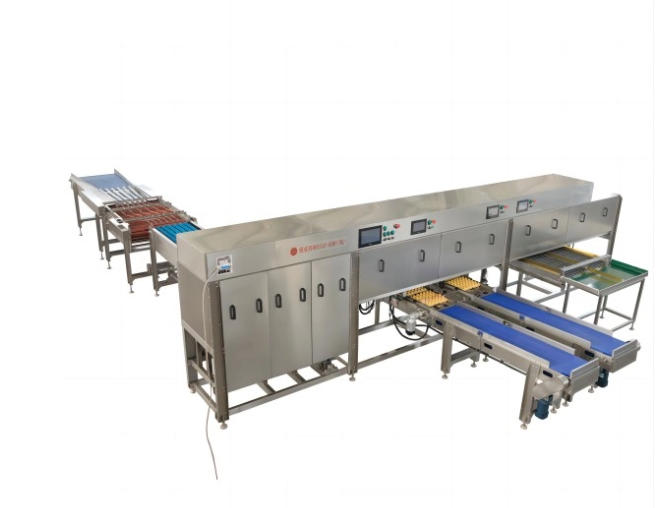
I. Optimizing the Egg-Washing Process A well-designed egg-sorting process can effectively reduce the breakage rate. Before washing, use a mechanical egg scale to weigh each egg individually; eggs of different weights will fall into separate zones, allowing operators to collect them from the egg trays. This not only reduces labor costs but also effectively prevents egg breakage by ensuring uniform egg size. Egg Washer II. Appropriate Conveying Methods Eggs are susceptible to impact, but they are much safer when submerged in water. Therefore, if a fully automatic egg washing machine can load eggs into water, it can effectively prevent eggs from colliding with one another, thereby reducing the likelihood of breakage.
III. Pay Attention to Egg Types During Procurement: There are many types of eggs, such as chicken eggs and duck eggs. While breakage can occur during the washing process, there are also many other causes of breakage—such as damage that occurs before washing due to other factors. This requires careful attention to quality when procuring eggs.
Reasons for Washing Eggs: Eggs are laid through the cloaca of laying hens, and their surfaces are coated with intestinal microorganisms. In contaminated environments, they can also become infected with large numbers of pathogenic bacteria. Sampling surveys indicate that while a small number of eggs carry Salmonella on their surfaces, a large number of eggs have E. coli levels that severely exceed safety standards. Microorganisms and pathogenic bacteria on the surface of eggs can enter the egg through the countless pores in the shell and multiply rapidly, severely affecting egg quality and posing a health risk to consumers. The best way to prevent egg contamination is to wash and disinfect the eggs immediately after they are laid to kill harmful bacteria, remove contaminants, and eliminate the various pathogens and harmful substances that are inevitable in poultry production.